Feeds:
Posts
Comments

TEAS’E PLEASE?

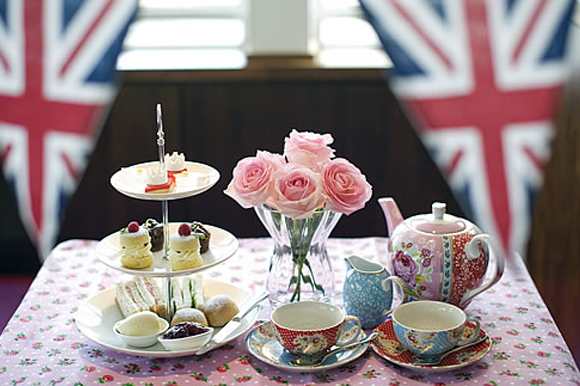
British High Tea - a Portuguese idea.I don’t know how you feel in the morning, but a nice cup of tea sets me up for the rest of the day. Every time I drink a cuppa, it evokes memories of my grandmother singing to me:


I like a nice cup of tea in the morning, for to start the day you see, and at half past eleven, well my idea of heaven is a nice cup of tea.

Original Binnie Hale recording here.

I would stare at her wondering how she could enjoy such a cuppa steaming liquid, when my preference was a fruit juice!

Tea is so much a part of our British way of life. I didn’t realise it was initially introduced to this country by a Portuguese princess, Catherine of Braganza, in the 1660’s after her marriage to King Charles 2nd. A gift to Charles 2nd in Catherine’s dowry was the port of Bombay in India, now known as Mumbai. This valuable port was handed over to the East India Company for an annual rent of £10 in gold.

Famous diarist Samuel Pepys first mentioned drinking tea (spelled tee), in his diary entry for 25th September 1660. He noted that it was China tea. Interestingly, tea drinking was considered unusual in that period with the commoners! Pepys was a member of the wealthy London set.

The British first introduced tea plantations into India to break the monopoly of China tea. Much later, vast areas of land in India, were converted to the production of tea by the British East India Company. India has now evolved into one of the most technologically equipped tea industries in the world, although it is now alleged that China has overtaken India due to increased land availability.

In more recent times the Indian Government has been sympathetic to the demands of their industry and pledged to support tea plantations and lobbied extensively with world trade organisations.

There’s a lot of history attached to the tea industry and millions depend on the sale of tea, not just for the feeling of well-being but for the actual standard of living from proceeds of tea production exported to the rest of the world.

Now enjoy that cuppa tea! I prefer Indian!

What’s yours? Mine’s Teasmade!
I haven’t visited Hull for some considerable time – years.

When my daughters visited from Suffolk and Devon over the Christmas break we decided to pay a visit to the city centre. We were partly motivated by a much publicised pantomime that my granddaughter “Summer” wanted to see and the free parking. We all drove down Anlaby Road to Albion Street car park, which we used a lot in the past.

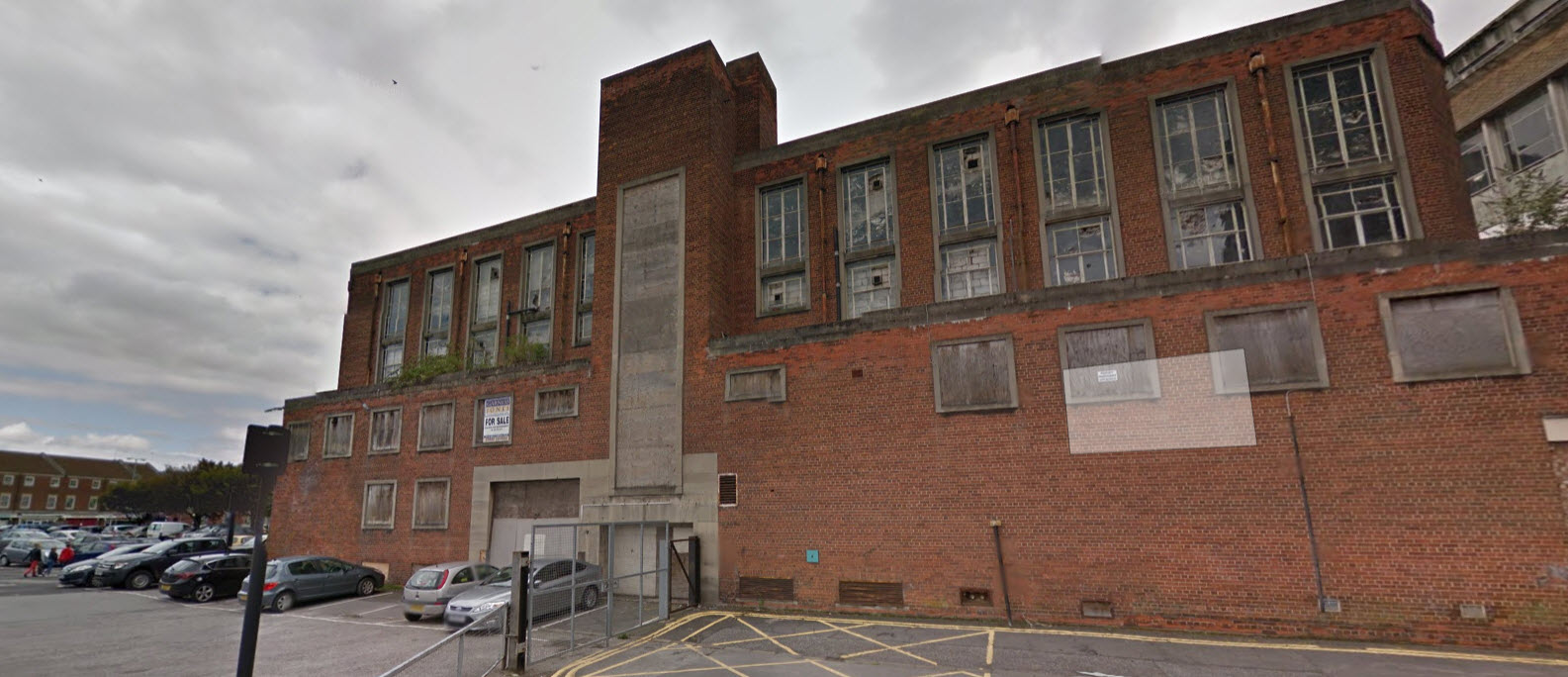
Albion street car park and its derelict buildings

Albion street car park and its derelict buildings

I wasn’t prepared for the shock in store! The former Edwin Davis building has become a habitat for local vermin and pigeons – how comfortable for them. Broken windows, dereliction throughout. Next to that was the former Co-op building also in a right old state of repair. Opposite Edwin Davis lays the former Police offices. Rest in peace. Is this the spectacle Hull is reserving for visitors to the ‘City of Culture’? I felt a real sense of sadness for this once bustling city I knew in the sixties, seventies and even eighties. My eldest daughter visited Russia in the eighties and made the unfortunate comparison…

Whatever has happened?  At least Scope has a decent, modern shop to encourage folk with a spare bob or two and Radio Humberside looks smart on the corner near Queens Gardens. Fortunately, Whitefriargate still appears to be thriving too.

When I see this kind of lack of development, I really wonder why Hull City Council wants to spread its wings. Why does it want to swallow other boundary areas for expansion when its own inner city has gaping areas of brown field sites. Surely it is easier to develop inner city brown field sites than lush residential areas in the suburbs?

It’s not surprising that Hull citizens find Anlaby Retail Park such an attraction!

BASIC INSTINCT

Basic InstinctIt is one thing to seduce public opinion by appealing to basic instincts with emotive, electoral promises about EU membership and immigration. It is another to be able to deliver on those promises once in power. And let’s be clear, those promising simple solutions to the above, will unlikely be able to deliver on them without doing serious damage to our economy and the fabric of our society.

Don’t get me wrong, the questions raised about EU membership and immigration are serious. They are also complex and require carefully thought solutions. I have felt for some time that the illusionary fog forming around the arguments portrayed by certain cult figures is making reasonable debate impossible.

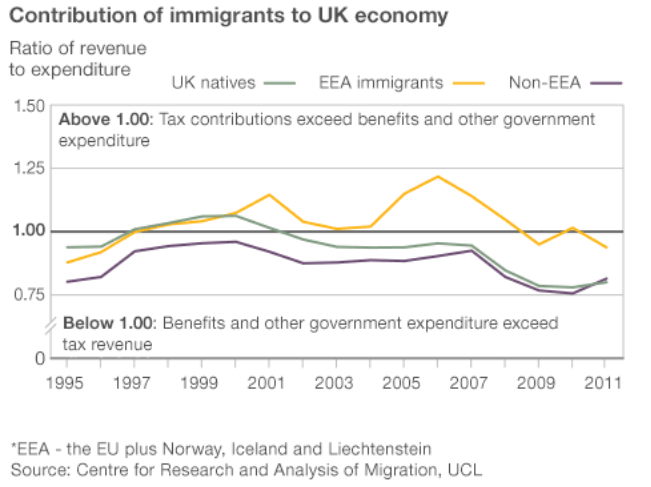
For instance, according to last year’s University College London study “The Fiscal Effects of Immigration to the UK” by professors Christian Dustmann and Dr. Tommaso Frattini, only 0.15% of the NHS budget is lost to ‘health tourism’. Immigrants were actually net contributors for the first decade of this millenium.

The report also states that European immigrants have paid 34% more in taxes than they claim back from the state and that non-European immigrants paid 2% more. Over the same period, British citizens paid 11% less in tax than they claimed back. Immigrants are also 45% less likely to receive state benefits than British citizens and 3% less likely to live in social housing – inconvenient truths for some.

UCL Fiscal Immigration Report

Is it fair then to stigmatise and alienate these people? Are we not pouring more salt onto a wound that is already weeping? Immigrants are easy targets, because we fear the unknown and the unfamiliar – but that does not mean our fear is justified.

True, the report looks backwards, and with the shifting demographic we also need to project forwards to ensure the trend continues. My point is this:  let’s at least have a reasonable debate – based on the facts – rather than current scaremongering.

And is EU membership really a burden on the UK? This seems to me to be a very short-sighted view. The government spends less than 0.5% of GDP on its EU membership. Yet, Britain receives 52% of all its trade from member states. What would happen to the £400 billion a year trade that is today free from customs duties? Protectionism is a two-way street and the EU would certainly react by erecting barriers in the form of trade tariffs that would render our goods less attractive. That would eventually reignite unemployment. More subtle though is the intangible impact separation from the EU would have on international relations. Close trade ties between nations is the best insurance against civil strife that eventually leads to war. Most wars are fermented through some kind of trade imbalance. Did we learn nothing from history?

And what would happen to our freedom to travel, live, work, study, and retire anywhere in the EU? Would we become a more introspective nation? Would we slip down the slope that has captured Russia?

Is anyone listening to these and other arguments?

The short answer must be no. Otherwise how to explain current voting trends? It seems like the “cut the umbilical cord from Europe” answer is winning the day.

Let’s hope that recent election results are simply the manifestation of frustration rather than a deep rooted sea change in collective attitudes.

Let’s listen to all sides of the argument. If we do, common sense rather than basic instincts will prevail.

Photo copyright: Mark Adams

“Maman” by Louise Bourgeois Photo copyright: Mark Adams

I was intrigued by zoologist Dr. Tim Cockerill’s BBC4 “Spider House” programme last week, whose purpose it is to correct the bad press spiders tend to get. He is an excellent presenter and I didn’t know that he’s a local – from Sutton, east Hull.

Dr. Tim Cockerill

Dr. Tim Cockerill

The programme is very timely, as I always get several huge house spiders scuttling around the borders of the room this time of year. Not large enough to cast shadows though! Now I know they’re shopping for a male to further the species and also provide a post-coital supper.

It brings to mind the more than 10 meter, eye-catching spider that sits in front of the Tate Modern suitably named “Maman”; the work of French-born artist Louise Bourgeois.

There’s a second giant spider in Liverpool, this time called “La Princesse”, created by another French artist François Delarozière, commissioned to inaugurate their year as cultural capital in September 2008.

La Princesse by Delarozière Photo copyright: Matthew Andrews

La Princesse by Delarozière
Photo copyright: Matthew Andrews

That one is 15 meters high, weighs 37 tonnes and is made from reclaimed steel and poplar wood.

It’s interesting to see how arachnids capture the imagination, usually in some form of anxiety. As Dr. Tim Cockerill points out, they are neither monstrous nor scary.

Which leads me to my next thought, I wonder what Hull has in mind to mark its City of Culture year in 2017. Perhaps Hull’s very own zoologist, Dr. Tim can advise them!

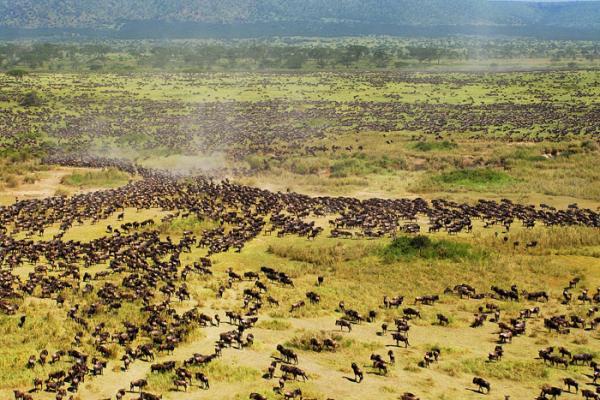
Up to 500,000 wildebeest migrate through Africa's Serengeti

Up to 500,000 wildebeest migrate through Africa’s Serengeti – but numbers overall are in decline

The future of Africa’s wildlife is hanging in the balance. Lions, cheetahs and hyenas are all experiencing declining populations. These animals once roamed majestically across the African continent. Today they can only be found in pockets of their former wilderness.

The once vast herds of grazing animals that follow climatic seasons in search of fresh grass across the plains have been decreasing for decades. The wildlife organisation SAVE is working to recover declining wildebeest populations.

And what of the elephant and rhinoceros poached for their tusks on demand by an insatiable oriental appetite for ivory?

An endeavour to keep Africa’s people free from the scourges of disease is paramount, but let’s not forget the fragile African ecosystem that depends on this fauna too. Let’s not develop a taste for Africa wildlife on our western dinner tables, that can only accelerate its extinction.

I am not a purist when it comes to being a vegetarian. I am all for encouraging the consumption of “home grown” free range produce so that we can avoid endangering the world’s more exotic wildlife.

A close shave


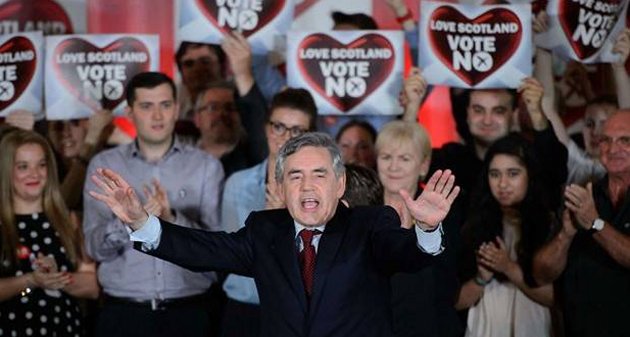
Gordon Brown

Gordon Brown – passionately defending the ‘Vote No’ cause

A once in a lifetime event that captured the imagination of the world over – that was the Scottish referendum. Some hailed it as a courageous act of democracy on behalf of the British Government, others a needless leap into the unknown. And it very nearly was. At least now the question is settled for a generation.

Despite the media’s talk of a comfortable victory, it was to me, a very close shave. Let’s not forget that close to half of the population voted for independence. I shudder to think what a ‘Yes’ victory would have done to our standing in the world, let alone the administrative mess and cost of untangling Scotland from the United Kingdom.

As the Queen, Westminster Village, British citizens in their majority and Brussels breathe a collective sigh of relief, we can only applaud the victory of the ‘No’ camp and the Scottish people in general for the way this referendum was run. Politicians across Europe are calling it ‘a class act’ – serving as a lesson in democracy to our troubled world. And the manner in which the separatists conceded their defeat will hopefully quickly heal the wounds of the last few days, weeks and months.

Ironically, this victory is likely to weaken Westminster as it picks through the promises and wrestles over their implementation. The Scottish ‘Yes’ camp lost, but Scotland emerges stronger.

I must say that I was surprised at Alex Salmond’s quick resignation. Pushing party politics aside, dare I say that Gordon Brown deserves a shot at the newly open top job?

Read related post here.

Land of Hope and Glory!

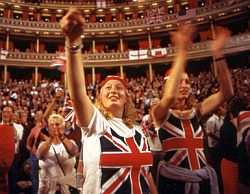
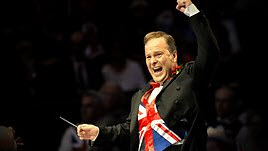
After watching the BBC’s “Last Night at the Proms”, I was filled with an immense sense of pride. Proud to be English – at the same time, British. I witnessed live, a coming together of the British nation. Everyone was so happy in the Royal Albert Hall, particularly the Finnish conductor Sakari Oramo! There was an atmosphere of ‘Britishness’. Four nations together. Is all of this “togetherness” going to be spoilt by one person’s ego? No, I don’t think so!

Finnish conductor Sakari Oramo Photo: BBC

Finnish conductor Sakari Oramo
Photo: BBC

The Britain of today, the United Kingdom, after all, is a Land of Hope and Glory, Mother of the free! We are free. We should not be mesmerized by one person filled with his own self-importance North of the Border. Andrew Marr’s The Politics Show, is an excellent example of Britishness. Let us hope that common sense reigns and we still remain a Land of Hope and Glory after Thursday 18th September 2014. And thanks to my Scottish friends for helping out on occasions!

Read related post here.

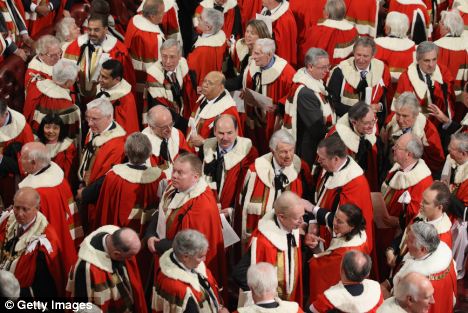
Ageing House of Lords

If the House of Lords were representative of the British workforce, the average age of a worker would be 69

Ageism could materialise as an important issue in the 2015 local government elections. According to the last census, over 16% of the electorate are over 65. When you think how tight run elections are these days, that’s a significant number that can swing a vote.

In the UK, laws against ageism are fairly recent. Age discrimination laws were brought into force in October 2006 and can now be found in the Equality Act 2010. This implements the European Commission’s Equal Treatment Framework Directive passed in 2000 and protects people against direct discrimination. There is also a provision in the Equality Act 2010 to prohibit Age Discrimination in the provision of goods and services. All of this legislation hasn’t withheld the rise in the number of complaints and claims however. Cases are expected to reach 15,000 by 2015!

The world’s population is aging, due to falling birth rates and increasing longevity. Here in the UK, the number of people aged 60 and above is expected to increase by 17 percent by 2020, while the number of under-16s is expected to increase by just 7 percent. Contrary to what you might think, this aging trend shouldn’t be a problem – if we get creative, it could actually represent a significant economic opportunity.

Areas that can benefit are i) education for those looking to refresh skills,  ii) the leisure, tourist and entertainment industries, iii) wellness and health spending, and iv) mobile IT health services, to name just a few. Whose going to pay for that? How about lifelong financial services such as tailored equity releases and health insurance?

I only hope that those who discriminate will live long enough to taste their own medicine. Only then will they fully understand the true feelings of the “older generation”. It’s a generation??????????????????????????????????????? that wants to compete on an even footing rather than be denigrated. They want to be praised for their contribution and commitment to society. Many have the maturity, motivation, wealth of experience and stamina to outperform a younger workforce. They should be allowed to share their experience with the rest of society if they so choose. It is a fallacy to think that just because someone is younger, they are fitter for a particular purpose.

Take the median age in the House of Lords – currently 69; and it is an ageing population. Only 17% are below the age of 60, 50% are over 70 and 18% are over 80! If we are able to entrust the country’s legislation to these ageing professionals, surely we can apply the same reasoning to the rest of the ageing professionals and willing souls in society.

You might even say that the House of Lords is a model of how to care for the elderly.

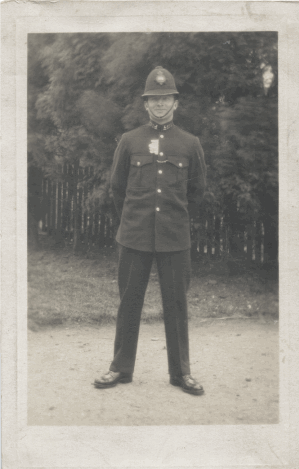
Should I enabled be, to start life again,

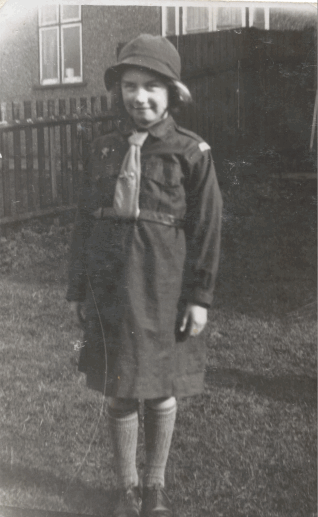
My father, PC William Pomfrey 1902-1935

My father, PC William Pomfrey

Not as a babe unaffected by tears,

But allowed to age thru the learning years.

With Dad still alive, so I could strive,

Maths enjoy, no tears to hide my avoidance ploy!


Learn to use fractions, decimals as one should.

Enjoy the classroom scene as best as I could.

Persevere, learn and gain to levels high.

Work hard in school years and reach for the sky.


Would not change love of Nature within my life.

Mary Louise Pomfrey

Mary Louise Pomfrey (Kingston)

I would be caring, sensitive, as father strived.

He was a policeman who cared with pride.

Then a victim of murder ended Dad’s life,

Through a source of infection, that added to strife.


The Natural world of which we should care.

All wildlife on Earth was put here to share.

I would paint as an Artist with colours that flow.

And receive praise for canvasses put on show.


My mother long gone, led a stressful life.

For she strived so hard as was no longer a wife.

My son and daughters the nest have flown.

To Paris, Suffolk and a West Country home.


I transferred from the South some years ago

Have travelled far and wide,

Including the Indian and Pacific tide.

Now married to Yorkshire land of the free.

Here’s to your health with a nice cup of tea!

(c) 2012 Ron McCombe.

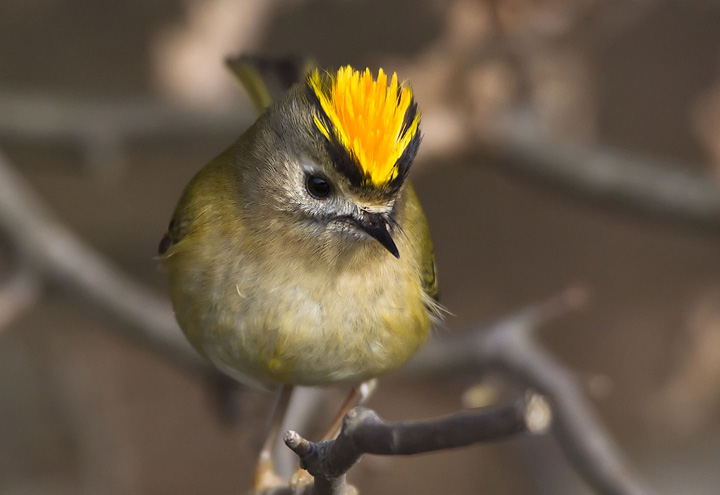
A Goldcrest (c) 2012 Ron McCombe.

The answer is: the season of spring, when birds and animals are preparing to enjoy the coming months with new birth and hopefully continuing warmth and sunshine. My garden has a semi-wild area containing shrubs, bushes and a “stopped-in-its-tracks” real-life, pitifully shortened, Redwood tree. It’s probably a quarter of its natural size. I have to think of the neighbours.

Located in my randomly organised garden and centrally situated is a bird bath. I walked in its direction to see who and what was enjoying a drink. A remarkable sight, no heavier than a 5p coin – a Goldcrest. Having wintered here in Yorkshire, it must surely be on its return journey to Scandinavia. This tiny insectivorous bird enjoying a refreshing drink in my garden, survives our somewhat erratic mild to severe British winters. It will now proceed on its long journey, heading over the North Sea waves to its homeland, undoubtedly to breed and return late autumn to winter in Yorkshire once again.