Feeds:
Posts
Comments

Archive for the ‘Politics’ Category

I would like to express my sincere thanks to Douglas and the team that so diligently supported me in the field and especially to those that voted for me. A very special mention to David Davies for his support and to David Cameron. Their hard fought campaigns and spectacular victories made it all possible.

Now it’s down to work.


Victory 2015

Read Full Post »

Are ants political?

imageAnts are fascinating creatures. I watched one scupper across my table, avoiding the sugar I had mischievously placed in its way. It had a higher purpose. An objective beyond the game I wanted to play with it.

Ants start life as an egg. If fertilised, the progeny will be female. If not, then male – in itself quite amazing. I wonder what that says about male ants ! Their lives are the shortest – just 3 years, whereas queens can live for up to 30 years.

Ants can form colonies of varying sizes – from just a few living in a crack in the wall, to highly organised colonies of millions that infiltrate large territories.

They are socially ‘engineered’ with mathematical precision – workers, soldiers and other specialists. New workers spend the first few days of their adult life caring for the queen. Young and ‘graduate’ ants dig and do house work.

Ant society has divisions of labour, communication channels and an ability to solve complex problems. Each member of the community knows its place, its role, its purpose. There are no cases of unrest, disorder, strikes or mutiny. Their instinctive ability to modify habitat and tap resources and defend themselves is something we humans observe in awe.

image

The last TV debate – reinforcing divisions rather than advancing the debate

They exist for their mutual success. They are selfless. Humans on the other hand are self-aware so motivated by individual success. And this I suppose, is why our society will never function in the same way. Maybe that’s a good thing, but at times, when I watch the news and political debates like the last one, I do wonder.

Ants execute a social formula. A social formula that can only be embedded in their DNA. Otherwise how do they acquire it ? They have no forum for debate, no democratic elections, no opposition. They enter life and just get on with it – and do extremely well.

Ants seem to be born with politics – the same politic – in their ‘souls’ for the service of the community at large. Now that’s something all politicians can learn from.

Read Full Post »

I haven’t visited Hull for some considerable time – years.

When my daughters visited from Suffolk and Devon over the Christmas break we decided to pay a visit to the city centre. We were partly motivated by a much publicised pantomime that my granddaughter “Summer” wanted to see and the free parking. We all drove down Anlaby Road to Albion Street car park, which we used a lot in the past.

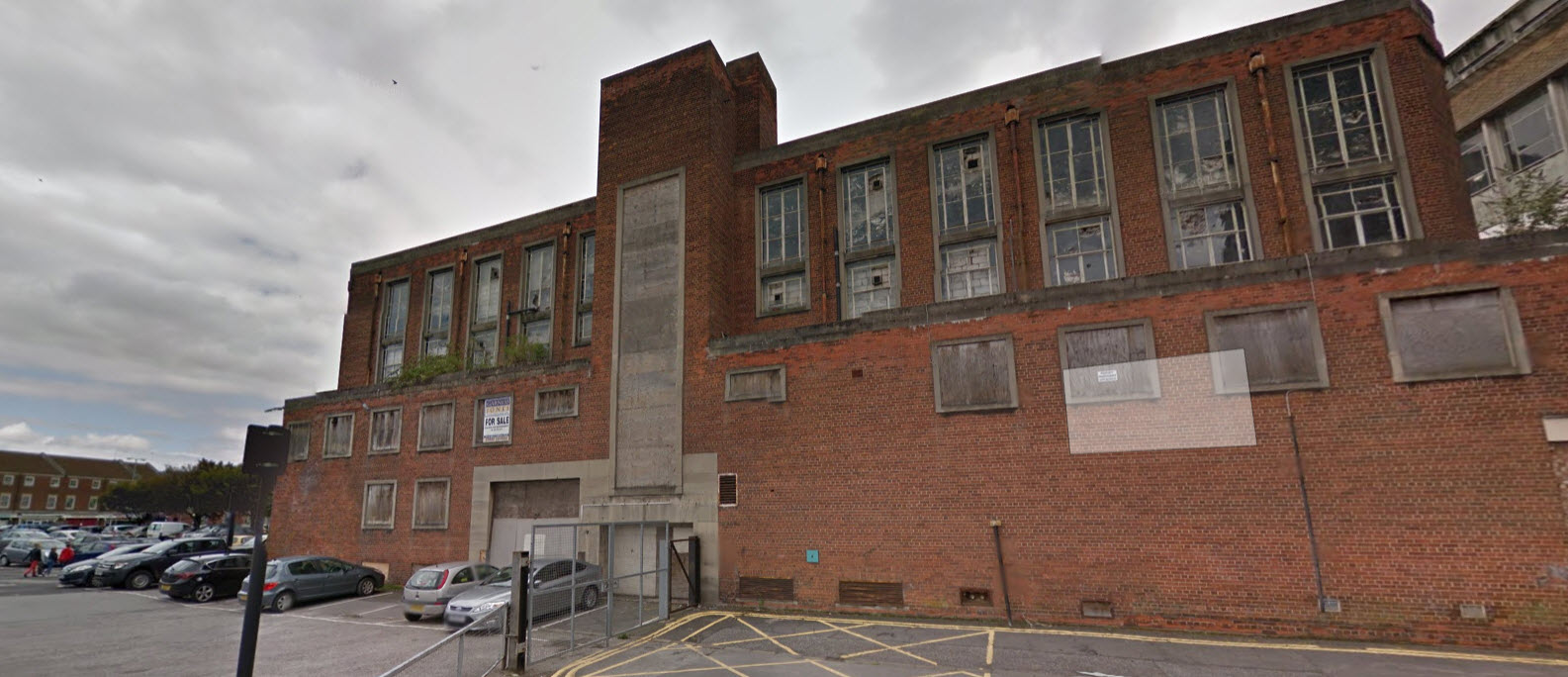
Albion street car park and its derelict buildings

Albion street car park and its derelict buildings

I wasn’t prepared for the shock in store! The former Edwin Davis building has become a habitat for local vermin and pigeons – how comfortable for them. Broken windows, dereliction throughout. Next to that was the former Co-op building also in a right old state of repair. Opposite Edwin Davis lays the former Police offices. Rest in peace. Is this the spectacle Hull is reserving for visitors to the ‘City of Culture’? I felt a real sense of sadness for this once bustling city I knew in the sixties, seventies and even eighties. My eldest daughter visited Russia in the eighties and made the unfortunate comparison…

Whatever has happened?  At least Scope has a decent, modern shop to encourage folk with a spare bob or two and Radio Humberside looks smart on the corner near Queens Gardens. Fortunately, Whitefriargate still appears to be thriving too.

When I see this kind of lack of development, I really wonder why Hull City Council wants to spread its wings. Why does it want to swallow other boundary areas for expansion when its own inner city has gaping areas of brown field sites. Surely it is easier to develop inner city brown field sites than lush residential areas in the suburbs?

It’s not surprising that Hull citizens find Anlaby Retail Park such an attraction!

Read Full Post »

Basic InstinctIt is one thing to seduce public opinion by appealing to basic instincts with emotive, electoral promises about EU membership and immigration. It is another to be able to deliver on those promises once in power. And let’s be clear, those promising simple solutions to the above, will unlikely be able to deliver on them without doing serious damage to our economy and the fabric of our society.

Don’t get me wrong, the questions raised about EU membership and immigration are serious. They are also complex and require carefully thought solutions. I have felt for some time that the illusionary fog forming around the arguments portrayed by certain cult figures is making reasonable debate impossible.

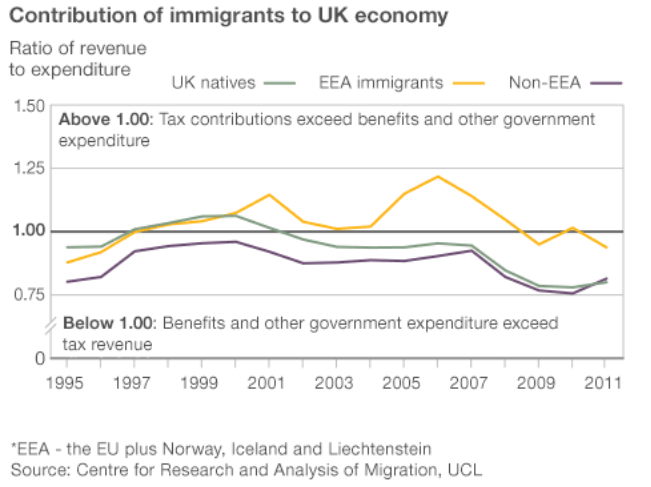
For instance, according to last year’s University College London study “The Fiscal Effects of Immigration to the UK” by professors Christian Dustmann and Dr. Tommaso Frattini, only 0.15% of the NHS budget is lost to ‘health tourism’. Immigrants were actually net contributors for the first decade of this millenium.

The report also states that European immigrants have paid 34% more in taxes than they claim back from the state and that non-European immigrants paid 2% more. Over the same period, British citizens paid 11% less in tax than they claimed back. Immigrants are also 45% less likely to receive state benefits than British citizens and 3% less likely to live in social housing – inconvenient truths for some.

UCL Fiscal Immigration Report

Is it fair then to stigmatise and alienate these people? Are we not pouring more salt onto a wound that is already weeping? Immigrants are easy targets, because we fear the unknown and the unfamiliar – but that does not mean our fear is justified.

True, the report looks backwards, and with the shifting demographic we also need to project forwards to ensure the trend continues. My point is this:  let’s at least have a reasonable debate – based on the facts – rather than current scaremongering.

And is EU membership really a burden on the UK? This seems to me to be a very short-sighted view. The government spends less than 0.5% of GDP on its EU membership. Yet, Britain receives 52% of all its trade from member states. What would happen to the £400 billion a year trade that is today free from customs duties? Protectionism is a two-way street and the EU would certainly react by erecting barriers in the form of trade tariffs that would render our goods less attractive. That would eventually reignite unemployment. More subtle though is the intangible impact separation from the EU would have on international relations. Close trade ties between nations is the best insurance against civil strife that eventually leads to war. Most wars are fermented through some kind of trade imbalance. Did we learn nothing from history?

And what would happen to our freedom to travel, live, work, study, and retire anywhere in the EU? Would we become a more introspective nation? Would we slip down the slope that has captured Russia?

Is anyone listening to these and other arguments?

The short answer must be no. Otherwise how to explain current voting trends? It seems like the “cut the umbilical cord from Europe” answer is winning the day.

Let’s hope that recent election results are simply the manifestation of frustration rather than a deep rooted sea change in collective attitudes.

Let’s listen to all sides of the argument. If we do, common sense rather than basic instincts will prevail.

Read Full Post »
After watching the BBC’s “Last Night at the Proms”, I was filled with an immense sense of pride. Proud to be English – at the same time, British. I witnessed live, a coming together of the British nation. Everyone was so happy in the Royal Albert Hall, particularly the Finnish conductor Sakari Oramo! There was an atmosphere of ‘Britishness’. Four nations together. Is all of this “togetherness” going to be spoilt by one person’s ego? No, I don’t think so!

Finnish conductor Sakari Oramo Photo: BBC

Finnish conductor Sakari Oramo
Photo: BBC

The Britain of today, the United Kingdom, after all, is a Land of Hope and Glory, Mother of the free! We are free. We should not be mesmerized by one person filled with his own self-importance North of the Border. Andrew Marr’s The Politics Show, is an excellent example of Britishness. Let us hope that common sense reigns and we still remain a Land of Hope and Glory after Thursday 18th September 2014. And thanks to my Scottish friends for helping out on occasions!

Read related post here.

Read Full Post »

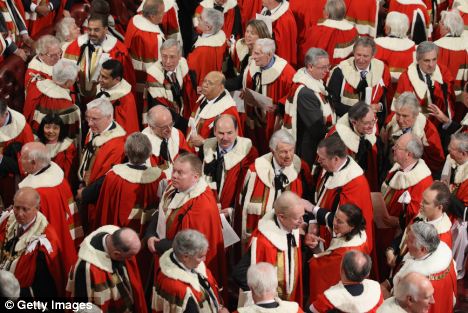
Ageing House of Lords

If the House of Lords were representative of the British workforce, the average age of a worker would be 69

Ageism could materialise as an important issue in the 2015 local government elections. According to the last census, over 16% of the electorate are over 65. When you think how tight run elections are these days, that’s a significant number that can swing a vote.

In the UK, laws against ageism are fairly recent. Age discrimination laws were brought into force in October 2006 and can now be found in the Equality Act 2010. This implements the European Commission’s Equal Treatment Framework Directive passed in 2000 and protects people against direct discrimination. There is also a provision in the Equality Act 2010 to prohibit Age Discrimination in the provision of goods and services. All of this legislation hasn’t withheld the rise in the number of complaints and claims however. Cases are expected to reach 15,000 by 2015!

The world’s population is aging, due to falling birth rates and increasing longevity. Here in the UK, the number of people aged 60 and above is expected to increase by 17 percent by 2020, while the number of under-16s is expected to increase by just 7 percent. Contrary to what you might think, this aging trend shouldn’t be a problem – if we get creative, it could actually represent a significant economic opportunity.

Areas that can benefit are i) education for those looking to refresh skills,  ii) the leisure, tourist and entertainment industries, iii) wellness and health spending, and iv) mobile IT health services, to name just a few. Whose going to pay for that? How about lifelong financial services such as tailored equity releases and health insurance?

I only hope that those who discriminate will live long enough to taste their own medicine. Only then will they fully understand the true feelings of the “older generation”. It’s a generation??????????????????????????????????????? that wants to compete on an even footing rather than be denigrated. They want to be praised for their contribution and commitment to society. Many have the maturity, motivation, wealth of experience and stamina to outperform a younger workforce. They should be allowed to share their experience with the rest of society if they so choose. It is a fallacy to think that just because someone is younger, they are fitter for a particular purpose.

Take the median age in the House of Lords – currently 69; and it is an ageing population. Only 17% are below the age of 60, 50% are over 70 and 18% are over 80! If we are able to entrust the country’s legislation to these ageing professionals, surely we can apply the same reasoning to the rest of the ageing professionals and willing souls in society.

You might even say that the House of Lords is a model of how to care for the elderly.

Read Full Post »

Riding the back of a tiger - live life to the full

Riding the back of a tiger – live life to the full

“Ageism” is stereotyping and discriminating against individuals on the basis of age. This term was first used by Robert Butler in 1969 to describe discrimination against senior members of society.

Robert Butler defined ageism as prejudicial attitudes, discriminatory practices and policies that perpetuate stereotypes. Today, ageism usually refers to discriminatory practices towards older people.

Rhetoric regarding intergenerational competition can be motivated by politics. A new definition of ageism was introduced in 2009. This definition positioned the elderly as a foundation for higher reliability. Lead researcher Isla Rippon, from University College London states that one in three older adults report age discrimination. If you feel you have been discriminated against, read this guide to UK law. A further study in 2012 showed that three quarters of people in the U.K. believed there were not enough opportunities for older and younger people to mix and work together. A shame, for they have much to learn from each other.

Michael Freedman, an outspoken advocate said against age discrimination in the art world:

“Mature students come to art late in life. Whatever happened to lifelong learning and the notion of a flexible work force?”

The elderly who are still physically and mentally fit have a lot to offer society and the local community. There is profit and advantage by sharing in their skills and experience. Yet society still tends to define the older population passed sixty-five as “over the hill”. This attitude needs to change so that seniors become a catalyst for growth rather than a burden to the state – on-the-job training of the young by seniors for instance.

Ageism is stereotyping and contradicts common sense and evidence. For example, age-based stereotypes can lead to very different conclusions when observing older and younger people say, with a back complaint or limp. The younger person’s condition is considered temporary – probably following an accident, whereas the elder person’s is considered chronic. This may in some cases be true, but elderly can recover quickly too, whereas young people can be permanently disabled.

So to all you ageism rebels out there, carry this ancient Indian proverb with you wherever you go:

“Life is like a wild tiger. You can either lie down and let it put its paw on your head, or sit on its back and ride it”.

Read Full Post »

The collapse of the badger culling trial in Gloucestershire represents a humiliation for the government’s policy on reducing bovine TB. Photograph: Ben Birchall/PA

Badger’s paying the price of Britain’s milk factory system.
Photograph: Ben Birchall/PA

At last this Governments’ Environment Agency has listened to the vast majority of people throughout the South West. Its hugely unpopular cull of Britain’s best known animal – Brock the Badger – has been called off.

We nature lovers must thank Brian May and his consistent bombardment of the Environment Minister’s Agency with facts that were being ignored until NOW.

Many farmers disagreed to the cull and they must be applauded too. They claim that some breeds of fine cattle are bred without their natural immunity that used to protect them. It’s up to farmers to keep their herds clean and free from infection, rather than this mass slaughter just because some farmers cannot cope with the extra effort. Cattle these days are just a pawn in a milk factory system that governs the price of milk!

So to those farmers that support the cull, clean up your farms – don’t provoke the slaughter of wildlife that has the same right to life as your factory bred dairy cows.

Read Full Post »

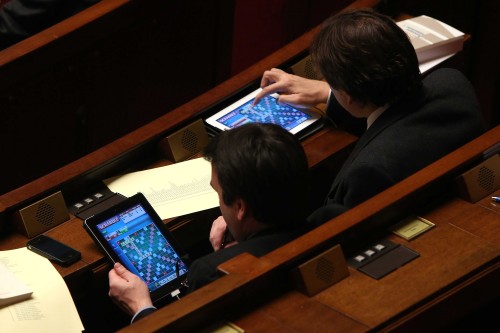
MPs enjoying a quiet game of scrabble as public debate rages

Modern democracy at work – two continental public officials enjoying a quiet game of scrabble as public debate rages

I read with interest the article “Let’s get people engaged in the political system by modernising the way we operate”, Hull Daily Mail October 11th. It related the proposal to broadcast committee meetings live and on-demand over the Internet. The idea is to address worries of a generation who are massively disengaged from the political system.

The Internet is certainly a very powerful broadcast medium – and Twitter an agent of democracy in some parts of the oppressed world. As a fairly new member to Twitter, I have begun to collect an interesting personal account of what’s going on with the rest of the world at first hand. It’s an exciting experience communicating with vast numbers of “Twitterers”. So the idea of working in real-time like this, it has to be said, is very tempting. We could follow public debate while shopping at Sainsbury’s.

And telephone companies can now pump video to Smartphones, tablets and PCs with surprising quality – at a price.

And that is the problem with this proposal; it comes at a cost to taxpayers both directly and indirectly at a time when many purses are empty. Smartphones, tablets, PCs and high-speed Internet connections are still out of reach for many household budgets, so the digital divide will enter the world of council business as it will benefit the digital community and exclude those not fortunate enough to have the means to equip themselves. Even today, close to 20% of the population has no Internet connection – that’s significant considering we have a coalition government.

And I am not so convinced local government is the place to conduct business in this way. Agreed it would be fun to see councillors sitting feverishly thumbing away on their tablets and Smartphones instead of straightforward noisy debate. And even more amusing to see others grandstanding to the populus to further their own personal causes and careers.

This technology proposal does not even come close to addressing ‘massive public disengagement’ with public business; that’s because it is largely caused by hypocrisy, scandals and personal ambition rather than serving the people. The only impact this proposal will have on the people is to raise their taxes.

For me, the only tablet I will need for following Council business will be for my head!

Read Full Post »

Hull bin man

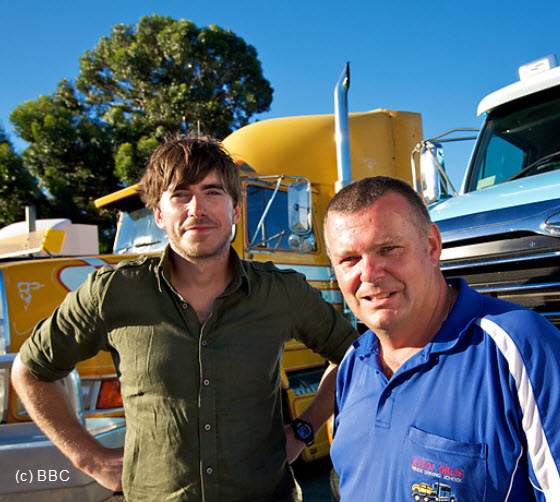
Fomer ‘bin man’ Stephen Mutch with Simon Reeves before his trucks giving him and his wife a much deserved new lease of life

It was fascinating to watch Simon Reeves excellent BBC2 series portraying, among other things, former Hull City Council ‘bin man’ Stephen Mutch making good by educating new lorry drivers in the BIG PLACE (Australia).

After learning that his hours and salary were going to drop by two thirds, he took his destiny into his own hands and took a great leap into the unknown. That unknown being a territory fertile with new job opportunities for those ready to knuckle down and graft.

The programme took a revealing look at life in Australia and the opportunities that exist for people ready to make a new start and dedicate themselves to a new way of life. And what a life!

Through sheer hard work and entrepreneurial spirit he has achieved a lifestyle he and his wife could only dream of when working for the council.

The programme showed Kalgoorlie and its gold super pit, the vast mining and mineral wealth now feeding China’s insatiable consumer appetite, and an experimental blue fin tuna farm. These are just some of the many new employment opportunities available for anyone ready to throw themselves in at the deep end.

This story is a lesson in humility. It is so easy to pidgeon hole people and leave them by the way-side, when they possess latent potential. We all possess latent potential; we just need a spark to ignite it and the opportunity to let it blossom. Not only do we need to do more as a country to nurture this kind of spirit here, but we should also be helping people working in struggling industries emigrate to Australia to relieve the pressure on our own unemployment.

This is not as crazy as it sounds; 565 Spanish job hunters have found work with German companies struggling to fill posts in just the last 12 months thanks to a concerted initiative between those two countries.

Read Full Post »

Older Posts »