Feeds:
Posts
Comments

Archive for the ‘General’ Category

A Grand Day Out

church_daffodils2Last Friday I caught the 7.15am train from Brough and met my youngest daughter Kim at King’s Cross at 10 am. It was a very hot, sunny day. From there we went to Borehamwood in the northern suburbs and visited the cemetery where my first daughter Deborah lies. Her short life of just 6 months would have been much longer were she born today.

We tidied her grave, wiped down the stones so that the lettering was visible. At the time of her death, my husband won £60 on the football pools and that was the cost of the grave stone. I’m pleased we bought it. Bulbs still come through in the spring.

We returned to Islington and had a super lunch at Carluccio’s (who by the way is opening in Beverley shortly). Sat by the canal, enjoyed the pigeons in a small park, visited a Japanese friend of Kim’s in her studio and made our way back to King’s Cross where I felt uneasy with the number of people milling around with no police in sight – I am sure they were there. Caught the Hull train at 7ish and arrived home at 9.30pm.

A very full and satisfying day.

Read Full Post »

A British sign of spring

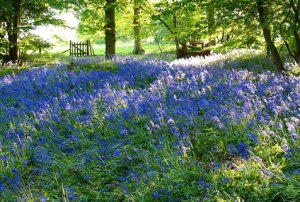
bluebells_2234194b Matt Binstead

Photo: Matt Binstead

Spring is almost here. A wonderful season of new-born animals and birds – when nature’s spark sets off another renaissance in gardens, hedgerows and woodlands throughout the countryside.

There is nothing more remarkable than the bluebell – usually first to cast its leaves long and wide to the surface. The flowers are deep violet or blue and what a joy it will be to see so much blue again in the garden. This spring will be a bumper year as the bulbs have propagated with time; just like their snowdrop bed mates, purchased from reputable garden centres.

Did you know that Britain contains more than half of the world’s population? Some common names for the bluebell are “harebell“, “auld man’s bell” and “wild hyacinth”.

BluebellsI remember as a young girl, we would go as a family to gather bluebells and primroses in the woods in Bedfordshire. The flowers did not survive long. But it was a joy to see their floral display in vases.

The main threat to their survival is people picking them and illegally digging up the bulbs. That is why it is now forbidden by UK law to gather wild bulbs from woodlands and hedgerows – punishable by a fine of £5,000 per bulb and up to 6 months imprisonment! Quite right too. You live and learn!

Read Full Post »

TEAS’E PLEASE?

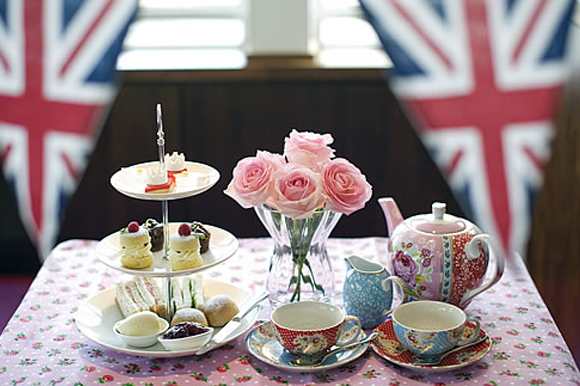
British High Tea - a Portuguese idea.I don’t know how you feel in the morning, but a nice cup of tea sets me up for the rest of the day. Every time I drink a cuppa, it evokes memories of my grandmother singing to me:


I like a nice cup of tea in the morning, for to start the day you see, and at half past eleven, well my idea of heaven is a nice cup of tea.

Original Binnie Hale recording here.

I would stare at her wondering how she could enjoy such a cuppa steaming liquid, when my preference was a fruit juice!

Tea is so much a part of our British way of life. I didn’t realise it was initially introduced to this country by a Portuguese princess, Catherine of Braganza, in the 1660’s after her marriage to King Charles 2nd. A gift to Charles 2nd in Catherine’s dowry was the port of Bombay in India, now known as Mumbai. This valuable port was handed over to the East India Company for an annual rent of £10 in gold.

Famous diarist Samuel Pepys first mentioned drinking tea (spelled tee), in his diary entry for 25th September 1660. He noted that it was China tea. Interestingly, tea drinking was considered unusual in that period with the commoners! Pepys was a member of the wealthy London set.

The British first introduced tea plantations into India to break the monopoly of China tea. Much later, vast areas of land in India, were converted to the production of tea by the British East India Company. India has now evolved into one of the most technologically equipped tea industries in the world, although it is now alleged that China has overtaken India due to increased land availability.

In more recent times the Indian Government has been sympathetic to the demands of their industry and pledged to support tea plantations and lobbied extensively with world trade organisations.

There’s a lot of history attached to the tea industry and millions depend on the sale of tea, not just for the feeling of well-being but for the actual standard of living from proceeds of tea production exported to the rest of the world.

Now enjoy that cuppa tea! I prefer Indian!

What’s yours? Mine’s Teasmade!

Read Full Post »

I haven’t visited Hull for some considerable time – years.

When my daughters visited from Suffolk and Devon over the Christmas break we decided to pay a visit to the city centre. We were partly motivated by a much publicised pantomime that my granddaughter “Summer” wanted to see and the free parking. We all drove down Anlaby Road to Albion Street car park, which we used a lot in the past.

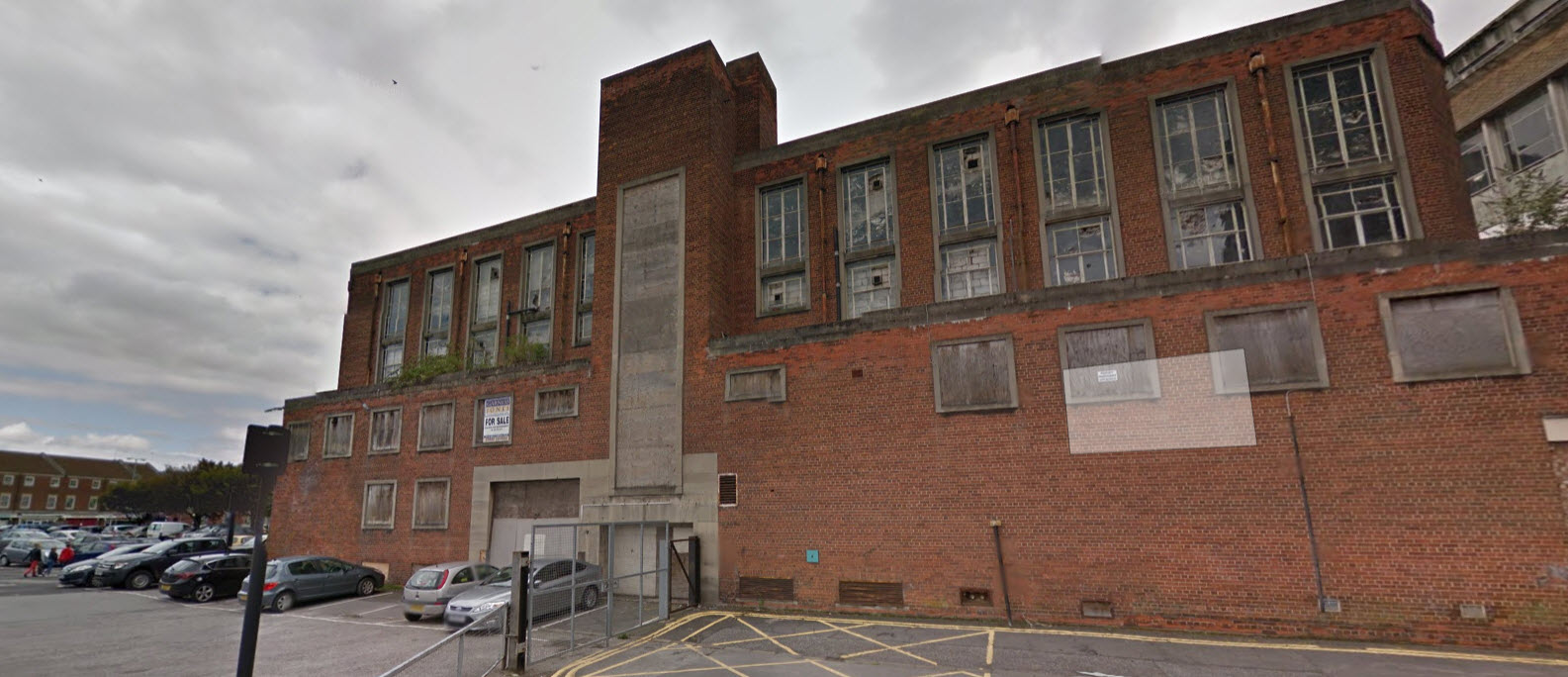
Albion street car park and its derelict buildings

Albion street car park and its derelict buildings

I wasn’t prepared for the shock in store! The former Edwin Davis building has become a habitat for local vermin and pigeons – how comfortable for them. Broken windows, dereliction throughout. Next to that was the former Co-op building also in a right old state of repair. Opposite Edwin Davis lays the former Police offices. Rest in peace. Is this the spectacle Hull is reserving for visitors to the ‘City of Culture’? I felt a real sense of sadness for this once bustling city I knew in the sixties, seventies and even eighties. My eldest daughter visited Russia in the eighties and made the unfortunate comparison…

Whatever has happened?  At least Scope has a decent, modern shop to encourage folk with a spare bob or two and Radio Humberside looks smart on the corner near Queens Gardens. Fortunately, Whitefriargate still appears to be thriving too.

When I see this kind of lack of development, I really wonder why Hull City Council wants to spread its wings. Why does it want to swallow other boundary areas for expansion when its own inner city has gaping areas of brown field sites. Surely it is easier to develop inner city brown field sites than lush residential areas in the suburbs?

It’s not surprising that Hull citizens find Anlaby Retail Park such an attraction!

Read Full Post »

Happy New Year!

Happy New YearDarwin’s theory of natural selection, loosely stated, says that organisms are more likely to succeed if they adapt. Adapting one’s situation to a suitable environment is certainly a good way to advance in life. That’s why I arrived in East Yorkshire from Boreham Wood some time ago with late husband Bill, when he moved to a new job with Smith and Nephew. That’s why I travelled 300 miles to Newmarket with husband Douglas to spend Christmas with daughters Karen and her family and Kim. That’s why Kim travelled a similar distance from Devon. My son Bryn and family stayed in France, where I travel from time to time to catch up with the French side of things.

Christmas meals were cooked in style by both daughters with games and refreshments to follow.  A simple family life as it should be.  It was delightful, refreshing and the weather was perfect.  What more can you ask for in this life?

I wish each and every one of you a Happy New Year!

Read Full Post »