Feeds:
Posts
Comments

Archive for the ‘Civility’ Category

Postman dogLetterboxes are sometimes the bane of the postman/woman.

Why? Well, those forms of correspondence that require extra shove, provide silent, but aggressive canines a great opportunity to snap with the force of a crocodile. It’s a bigger problem than you might think. Apologetic owners usually reveal themselves smugly with dog-in-hand the following day. They caution the postman to be more careful next time. Silence is not always “golden”.

Last week I witnessed such an event. Blood is cheap! Fore (four?) fingers withdrawn in haste, ultimately leading to a rush to A & E and a long wait for treatment, leaving a painful, throbbing protrusion. All caused by a seemingly cute little tail wagging dog… Fashionable dogs can be so aggressive.

On average around nine postmen and women a day are attacked by dogs across the UK with over 3,300 attacks taking place from April 2013 to April 2014, an 8 per cent increase on the previous year. Some of the injuries are horrific. New legislation means owners can now be prosecuted for dog attacks that take place on private property. Dog owners that alarm postmen face criminal prosecution since October 20, 2014 with fines of up to £20,000 or the prospect of theirs pets being seized. So dog owners beware, the postman is biting back! The Royal Mail last year launched a Dog Awareness Week to raise visibility of the problem.

The private letterbox dates back to 1849, when the Royal Mail first encouraged people to install their own letterboxes to facilitate the delivery of mail. Before then, letterboxes of a similar design had been installed in the doors and walls of post offices for people to drop off outgoing mail. An example of such a wall box (originally installed in the wall of the Wakefield Post Office) is dated 1809 and believed to be the oldest example in Britain.  It is now on display at the new Wakefield Museum.

Postmen will be glad to learn that they have nothing more to fear from my letterbox than a slight need for maintenance.

Read Full Post »

Little Aimee

In 2010, little Aimee fell in dog’s mess and wiped her eye. Quick intervention from doctor’s saved her life, but she is now partially blind.

Dog’s mess. A subject I’ve written about before. Dog excrement is a real public health hazard. It contains bacteria that can cause stomach upsets. Young children are particularly at risk due to their weaker immune systems as poor little Aimee here will attest to.

Unfortunately, the problem isn’t going to solve itself. Irresponsible dog owners that lead their pets down snickets have found it all too easy to soil the public highways. Too many snickets in Anlaby and Anlaby Common suffer from this problem – particularly on paths leading to Acre Head School. And the local residents are complaining.


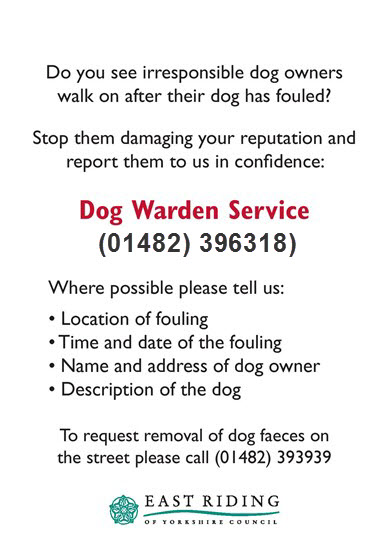
dogtoiletpostcard_2_2-page-001So it’s time selfish dog owners picked up their dues – on-the-spot fines of up to £80 with a maximum of £1,000 for serious offenders. How?

The East Riding is fighting back. Dog owners – be warned. Someone may be watching you.

The East Riding has appointed wardens to patrol the problem. And the East Riding’s and Government’s dog control websites let people report uncivil dog owners and their dogs.

So the next time, dog owner’s need to keep one eye looking over their shoulder and think about that on-the-spot fine that may be headed their way.

Report dog fouling here.

Read Full Post »

Ageing House of Lords

If the House of Lords were representative of the British workforce, the average age of a worker would be 69

Ageism could materialise as an important issue in the 2015 local government elections. According to the last census, over 16% of the electorate are over 65. When you think how tight run elections are these days, that’s a significant number that can swing a vote.

In the UK, laws against ageism are fairly recent. Age discrimination laws were brought into force in October 2006 and can now be found in the Equality Act 2010. This implements the European Commission’s Equal Treatment Framework Directive passed in 2000 and protects people against direct discrimination. There is also a provision in the Equality Act 2010 to prohibit Age Discrimination in the provision of goods and services. All of this legislation hasn’t withheld the rise in the number of complaints and claims however. Cases are expected to reach 15,000 by 2015!

The world’s population is aging, due to falling birth rates and increasing longevity. Here in the UK, the number of people aged 60 and above is expected to increase by 17 percent by 2020, while the number of under-16s is expected to increase by just 7 percent. Contrary to what you might think, this aging trend shouldn’t be a problem – if we get creative, it could actually represent a significant economic opportunity.

Areas that can benefit are i) education for those looking to refresh skills,  ii) the leisure, tourist and entertainment industries, iii) wellness and health spending, and iv) mobile IT health services, to name just a few. Whose going to pay for that? How about lifelong financial services such as tailored equity releases and health insurance?

I only hope that those who discriminate will live long enough to taste their own medicine. Only then will they fully understand the true feelings of the “older generation”. It’s a generation??????????????????????????????????????? that wants to compete on an even footing rather than be denigrated. They want to be praised for their contribution and commitment to society. Many have the maturity, motivation, wealth of experience and stamina to outperform a younger workforce. They should be allowed to share their experience with the rest of society if they so choose. It is a fallacy to think that just because someone is younger, they are fitter for a particular purpose.

Take the median age in the House of Lords – currently 69; and it is an ageing population. Only 17% are below the age of 60, 50% are over 70 and 18% are over 80! If we are able to entrust the country’s legislation to these ageing professionals, surely we can apply the same reasoning to the rest of the ageing professionals and willing souls in society.

You might even say that the House of Lords is a model of how to care for the elderly.

Read Full Post »

Riding the back of a tiger - live life to the full

Riding the back of a tiger – live life to the full

“Ageism” is stereotyping and discriminating against individuals on the basis of age. This term was first used by Robert Butler in 1969 to describe discrimination against senior members of society.

Robert Butler defined ageism as prejudicial attitudes, discriminatory practices and policies that perpetuate stereotypes. Today, ageism usually refers to discriminatory practices towards older people.

Rhetoric regarding intergenerational competition can be motivated by politics. A new definition of ageism was introduced in 2009. This definition positioned the elderly as a foundation for higher reliability. Lead researcher Isla Rippon, from University College London states that one in three older adults report age discrimination. If you feel you have been discriminated against, read this guide to UK law. A further study in 2012 showed that three quarters of people in the U.K. believed there were not enough opportunities for older and younger people to mix and work together. A shame, for they have much to learn from each other.

Michael Freedman, an outspoken advocate said against age discrimination in the art world:

“Mature students come to art late in life. Whatever happened to lifelong learning and the notion of a flexible work force?”

The elderly who are still physically and mentally fit have a lot to offer society and the local community. There is profit and advantage by sharing in their skills and experience. Yet society still tends to define the older population passed sixty-five as “over the hill”. This attitude needs to change so that seniors become a catalyst for growth rather than a burden to the state – on-the-job training of the young by seniors for instance.

Ageism is stereotyping and contradicts common sense and evidence. For example, age-based stereotypes can lead to very different conclusions when observing older and younger people say, with a back complaint or limp. The younger person’s condition is considered temporary – probably following an accident, whereas the elder person’s is considered chronic. This may in some cases be true, but elderly can recover quickly too, whereas young people can be permanently disabled.

So to all you ageism rebels out there, carry this ancient Indian proverb with you wherever you go:

“Life is like a wild tiger. You can either lie down and let it put its paw on your head, or sit on its back and ride it”.

Read Full Post »

Wandsworth Youth cleaning up an East Belfast car park

What is it with people that just spout rubbish while listening to the sound of their own voice? As a rule, I just listen politely.

And what is it with people that drop rubbish on the street? Should I apply the same rule? Be polite and say nothing? Surely it should be possible to say: “Would you mind picking that up?

When walking behind some youths the other day, I was tempted to reprimand them for deliberately dropping food wrappers. I didn’t because I feared they might take offence. Instead, I picked it up and put it in a bin. Coward! How times have changed. There was a time when elders were respected.

Is there a difference between the passiveness in the face of someone talking rubbish and someone dropping rubbish?

We need to motivate our youth to invest in their future, by caring for the environment today, like these teenagers in East Belfast. Caring for the environment is not just the domain of ecologists and politicians – it is the domain of every citizen, however young or old.

Read Full Post »

Anlaby Community Care is a registered charity and is unfortunately suffering from the financial downturn.

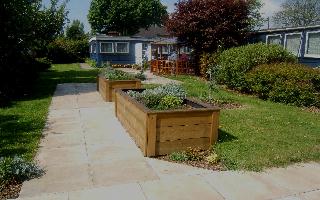
Day centre showing sensory garden

Day centre showing sensory garden

It first opened January 16th 1987, providing a meeting place for the elderly from different walks of life to socialise, share experiences and reduce the feeling of isolation – especially for those without families or friends. This is the centre’s primary role.

The majority of those who do attend, live alone and rely on the centre for activities to link with the community. The centre aims to keep mind, body and soul occupied, providing entertainment and a sense of belonging. A two course meal plus other refreshments provide more material support.

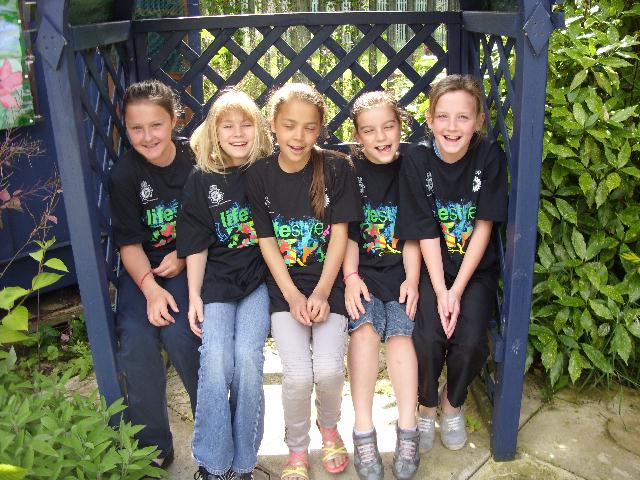
"Pink Piggies" from left to right) Molly Griffin, Ria Mould, Georgia Watson, Jessica Oliver and Amy Griffin.

“Pink Piggies” (from left to right) Molly Griffin, Ria Mould, Georgia Watson, Jessica Oliver and Amy Griffin.

Pupils from local schools and “Lifestyle groups” like the “Pink Piggies” participate, bringing a sense of vitality and purpose, while they themselves develop a greater understanding of the elderly. Unfortunately due to financial reasons, transport provided by the centre is now very limited, but a helper escorts the most elderly people to and from the centre. The Red Cross has also helped by sharing their vehicles. Families also ‘chip in’ by providing transport and shopping trips to local supermarkets help purchase essentials such as groceries.

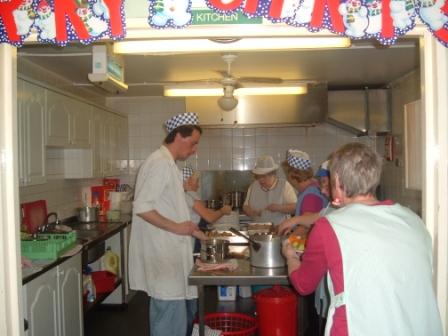
Volunteers in the day centre kitchen

Volunteers in the day centre kitchen

There are opportunities for volunteers and training is given for those interested in clerical, cooking, catering, general assistance, driving and escorting tasks. The centre provides 5 hours respite for carers and there are adult training opportunities, rooms and resources for individuals, groups, and colleges to gain experience in the caring profession. As a past chairman of the association, I know that every contributor is extremely devoted and feel very rewarded by the experience.

The centre is a major venue for locals wishing to organise get togethers and other events.

Donations of time or money are welcome.

Contact: Alan, chairman of the Anlaby Community Care Association (ACCA) on (01482) 651 232.

Address: Anlaby Community Centre, First Lane, Anlaby, East Yorkshire.

Read Full Post »

It’s not just dogs is it, I mean creating a mess?

Together a colleague and I spent an entire hour picking up litter in just one leafy Anlaby lane today. In that hour we collected enough litter to fill two large green bins – for Council collection from our own bins of course! The bin will need a thorough cleanse afterwards; it was full of detritus, but mostly beer cans, bottles, plastic wrappers and occasional condom packets. The mind boggles! It was our litter ‘pick-nic‘.

And I was wondering what had happened to the snails in the wintertime… now I know, a dozen or so were stuck to plastic food wrappers in the hedgerow. I gave them their freedom!

50 cans on park bench

A dog walker reported to me that in Anlaby House grounds a pile of 50 or so beer cans had been dumped next to a seat bequeathed by a widow in memory of her late husband… How thoughtful! Did someone just dump them there or was there a shindig and high revelry in the light of the moon behind the rhododendron bushes?

Fortunately the Council department have now organised the collection and a close watch will be instituted in future.

We humans are responsible for mess everywhere. It’s true we are the “throw-away-society“. People just throw litter anywhere, as long as its not in their own “patch”. It is “an ill bird that fouls its own hole” – as they say. What is happening to our civic values?

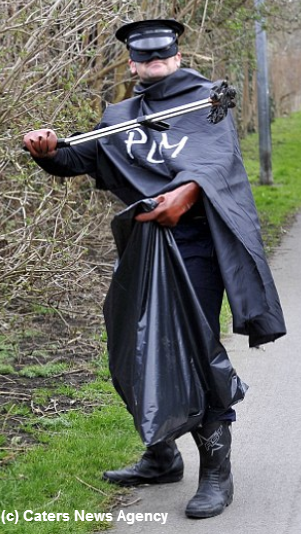
Phantom Litter Man

Phantom Litter Man

And those who are economic with the truth have a lot to answer for too. Where is the organisation to inform and organise such a litter ‘pick-nic‘? The Council refuse workers probably do not own a budget to litter pick on a regular basis; it needs to be regular because the muck is in every hedgerow where there is passing traffic and footpath walkers. Why don’t people just take it home? Sounds like a job for Hessle’s Phantom Litter Man! If only we all took a leaf out of his book – the roads, paths and countryside would be so much cleaner.

I suppose it has to be left to the good natured public volunteers, just like ourselves (and Phantom Litter Man) to go out and make Anlaby hedgerows and pathways look clean and tidy. My colleague spent an hour on his own last week collecting.

Pass through traffic

Who is responsible for all this rubbish? It is more often than not pass through traffic; most is slung from vehicles, or tossed aside by passers-by. They don’t seem to give a hoot.

Small consolation

At least I feel as though I have done something worthwhile in the neighbourhood today. My colleague and I have promised an hour litter ‘pick-nicking‘ from time to time just to keep on top of the problem in our neighbourhood.

Swiss study

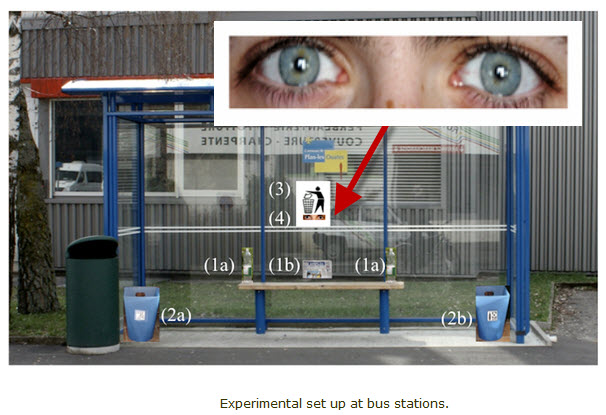
Eyes provoke public-spirited people to spend more time clearing litter

There are of course other good folk who litter pick in neighbouring communities. A newly published paper authored by two swiss “eco-ethologists” at the University of Neuchatel studied human behaviour in response to litter signs. It shows that public-spirited people will spend more time clearing litter if the person on the sign is accompanied with eyes. The study is careful to point out that the eyes do not increase the proportion of people who clear away litter, but rather the time invested by those who do. It’s a simple but effective measure akin to etching flies on urinals that may help keep our streets cleaner.

Read Full Post »

Dog dirt dodgems rant

Call it what you like, but I call it “dog dirt”. I am tired of being PC.

How I wish that when I was out walking, as I was this afternoon in Anlaby and Willerby, that I didn’t have to dodge dog dirt – sounds like a new video game.  Some people have the nerve to surreptitiously hide it in hedgerows when they think nobody is looking – so they think. Or creep around and stuff it under shrubs at night when they think nobody is around.

Seriously, to be told by a group walking leader that “You cannot go down that snicket this afternoon because it is caked in dog dirt” is extremely irritating.

You shouldn’t have to be staring at the ground…. hopping this way and that just because you want to go for a simple walk! I want to admire the scenery!

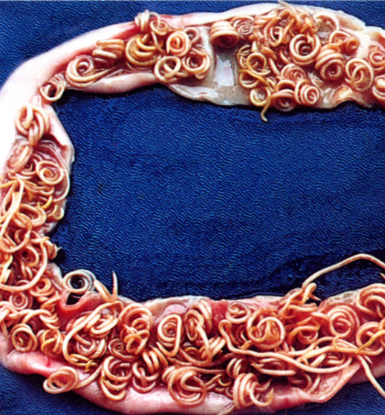
Toxocara Canis (roundworm) in a puppies gut

Do dog owners realise that they risk spreading disease? A single gram of dog dirt can contain over 20 million fecal bacteria including Toxocara Canis (roundworm) and E. coli, which can cause intestinal illnesses in humans and can be fatal in puppies. Dog droppings are one of the leading sources of E. Coli  (fecal coliforms) bacterial pollution in this country.

Dog owners who take their pet for walks in the countryside behave in the same way too. How many times have I crossed a muddy field filled with dog poo! Don’t get me wrong, I love dogs. It’s not their fault, well not entirely…

I was extremely happy to see Leeds County Council take the bull by the horns and start discussions about measures to restrict selfish dog walkers from certain areas. It goes without saying that I have reported the “offending” snicket to East Riding Council as it is one used by children attending local primary school.

Dog owners should be forced to carry a ‘pooper-scooper‘ and carry it home as they do in other countries or risk losing their license.

Read Full Post »