Photo credit – sandiquiz
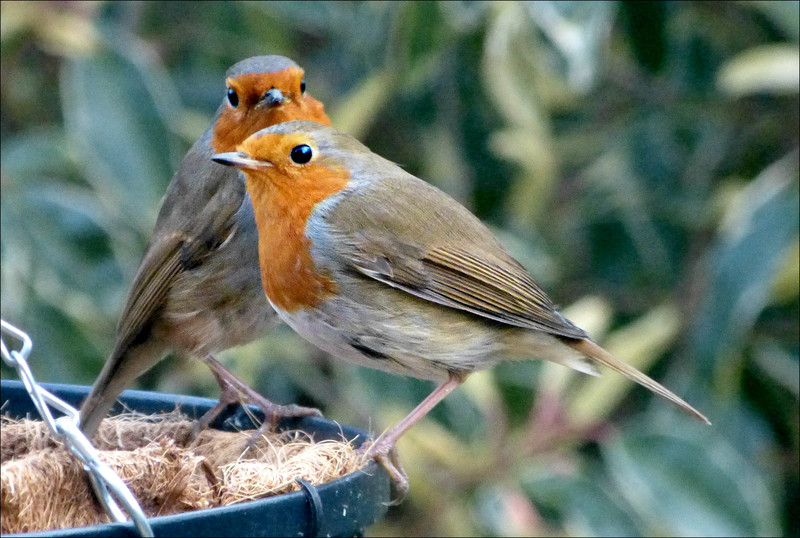
Gathering in the washing from the line this afternoon, I was greeted by that cheery chirp of the garden or European robin.
Actually calling him “robin redbreast” is deceptive, because it has a distinctive orange breast. This is because the colour orange was unknown in the English language until the 16th century.
The European robin is one of many species originally described by Linnaeus in his 18th century work. It prefers spruce woods in Northern Europe, contrasting with its preferences for parks and definitely gardens in our British Isles.
The robin is considered generally to be the gardener’s “friend” and for reasons of folklore – should never be harmed! They are generally unafraid of people and much drawn to human activities involving the digging of soil, in order to look for grubs and worms. My cheery garden friend is no exception and follows me around to see if I am going to unearth a wriggly accompaniment to the daily allocation of sunflower hearts I distribute. The robin can also be a night “flitter” and has been observed actively hunting insects on moonlit nights.
Would you believe European robins can be found in Fuerteventura. Very surprising, as the species does not breed either on that island or on neighbouring Lanzarote. They are actually wintering on the islands or just passing through during migrations between Africa and Europe.
Which makes me wonder… has “my” garden robin just arrived from Lanzarote?
I will never know. But it surely does.


 Mary's Blog