 It is one thing to seduce public opinion by appealing to basic instincts with emotive, electoral promises about EU membership and immigration. It is another to be able to deliver on those promises once in power. And let’s be clear, those promising simple solutions to the above, will unlikely be able to deliver on them without doing serious damage to our economy and the fabric of our society.
Don’t get me wrong, the questions raised about EU membership and immigration are serious. They are also complex and require carefully thought solutions. I have felt for some time that the illusionary fog forming around the arguments portrayed by certain cult figures is making reasonable debate impossible.
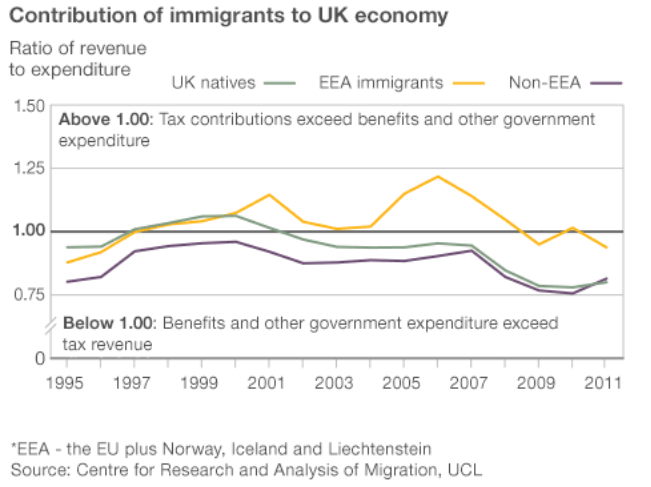
For instance, according to last year’s University College London study “The Fiscal Effects of Immigration to the UK” by professors Christian Dustmann and Dr. Tommaso Frattini, only 0.15% of the NHS budget is lost to ‘health tourism’. Immigrants were actually net contributors for the first decade of this millenium.
The report also states that European immigrants have paid 34% more in taxes than they claim back from the state and that non-European immigrants paid 2% more. Over the same period, British citizens paid 11% less in tax than they claimed back. Immigrants are also 45% less likely to receive state benefits than British citizens and 3% less likely to live in social housing – inconvenient truths for some.
Is it fair then to stigmatise and alienate these people? Are we not pouring more salt onto a wound that is already weeping? Immigrants are easy targets, because we fear the unknown and the unfamiliar – but that does not mean our fear is justified.
True, the report looks backwards, and with the shifting demographic we also need to project forwards to ensure the trend continues. My point is this: let’s at least have a reasonable debate – based on the facts – rather than current scaremongering.
And is EU membership really a burden on the UK? This seems to me to be a very short-sighted view. The government spends less than 0.5% of GDP on its EU membership. Yet, Britain receives 52% of all its trade from member states. What would happen to the £400 billion a year trade that is today free from customs duties? Protectionism is a two-way street and the EU would certainly react by erecting barriers in the form of trade tariffs that would render our goods less attractive. That would eventually reignite unemployment. More subtle though is the intangible impact separation from the EU would have on international relations. Close trade ties between nations is the best insurance against civil strife that eventually leads to war. Most wars are fermented through some kind of trade imbalance. Did we learn nothing from history?
And what would happen to our freedom to travel, live, work, study, and retire anywhere in the EU? Would we become a more introspective nation? Would we slip down the slope that has captured Russia?
Is anyone listening to these and other arguments?
The short answer must be no. Otherwise how to explain current voting trends? It seems like the “cut the umbilical cord from Europe” answer is winning the day.
Let’s hope that recent election results are simply the manifestation of frustration rather than a deep rooted sea change in collective attitudes.
Let’s listen to all sides of the argument. If we do, common sense rather than basic instincts will prevail.


 Mary's Blog