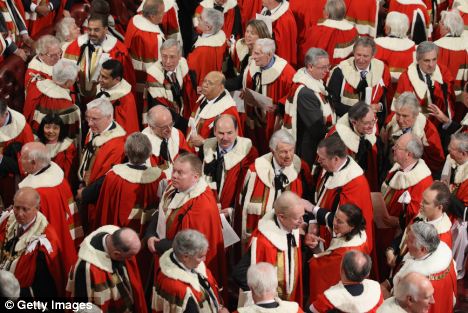
If the House of Lords were representative of the British workforce, the average age of a worker would be 69
Ageism could materialise as an important issue in the 2015 local government elections. According to the last census, over 16% of the electorate are over 65. When you think how tight run elections are these days, that’s a significant number that can swing a vote.
In the UK, laws against ageism are fairly recent. Age discrimination laws were brought into force in October 2006 and can now be found in the Equality Act 2010. This implements the European Commission’s Equal Treatment Framework Directive passed in 2000 and protects people against direct discrimination. There is also a provision in the Equality Act 2010 to prohibit Age Discrimination in the provision of goods and services. All of this legislation hasn’t withheld the rise in the number of complaints and claims however. Cases are expected to reach 15,000 by 2015!
The world’s population is aging, due to falling birth rates and increasing longevity. Here in the UK, the number of people aged 60 and above is expected to increase by 17 percent by 2020, while the number of under-16s is expected to increase by just 7 percent. Contrary to what you might think, this aging trend shouldn’t be a problem – if we get creative, it could actually represent a significant economic opportunity.
Areas that can benefit are i) education for those looking to refresh skills, ii) the leisure, tourist and entertainment industries, iii) wellness and health spending, and iv) mobile IT health services, to name just a few. Whose going to pay for that? How about lifelong financial services such as tailored equity releases and health insurance?
I only hope that those who discriminate will live long enough to taste their own medicine. Only then will they fully understand the true feelings of the “older generation”. It’s a generation that wants to compete on an even footing rather than be denigrated. They want to be praised for their contribution and commitment to society. Many have the maturity, motivation, wealth of experience and stamina to outperform a younger workforce. They should be allowed to share their experience with the rest of society if they so choose. It is a fallacy to think that just because someone is younger, they are fitter for a particular purpose.
Take the median age in the House of Lords – currently 69; and it is an ageing population. Only 17% are below the age of 60, 50% are over 70 and 18% are over 80! If we are able to entrust the country’s legislation to these ageing professionals, surely we can apply the same reasoning to the rest of the ageing professionals and willing souls in society.
You might even say that the House of Lords is a model of how to care for the elderly.


 Mary's Blog