Ladybirds (Coccinellidae) are here in abundance again after their winter hibernation and colourful red shells are emerging from between the pampas grass and bark of my garden.
The colour red
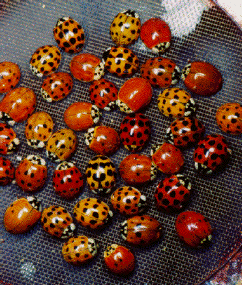
A cluster of different varieties of ladybirds
Their latin name is taken from the colour scarlet, which is a device to warn off predators. This phenomenon is called aposematism and works because predators learn by experience to associate certain prey with a bad taste. They are distasteful to most birds so these little bugs will usually enjoy a fairly long and contented lifespan; apart from when they take to the air because swifts and swallows are immune to its defensive chemicals. There are other predators too such as fungi, mites and parasitic wasps and flies who lay eggs on ladybird larvae. They are also the prey of frogs, wasps, spiders, and dragonflies.
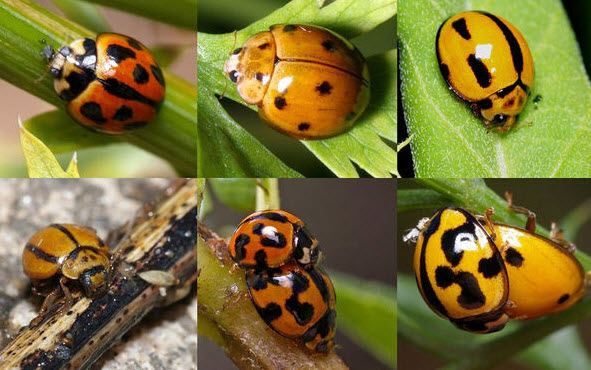
Not your average ladybird
More than 3,500 species
There are over 3,500 species worldwide of which 43 are in the UK. You’d probably only recognize 26 as being ladybirds and they differentiate themselves by a variety of colours and spot count on their shell. Depending on the species, they can have spots, stripes, or no markings at all. It has been said that the number of spots on a ladybird’s back determine its age, but this is just a myth. They usually live for just one or two years. Read this interesting UK survey about ladybirds in this country.
Respected beetle
This most popular beetle whose daily diet is a vast consumption of aphids can now be seen in large clusters. Several centuries ago, it was thought to bring bad luck to kill them, which explains why children have been taught to respect them through folklore and nursery rhymes. Those of you with prize roses should be greeting their arrival with open arms, even if from time-to-time they can be a nuisance to farmers.


 Mary's Blog
Leave a comment